

Birmingham wasn't Built for the Car...


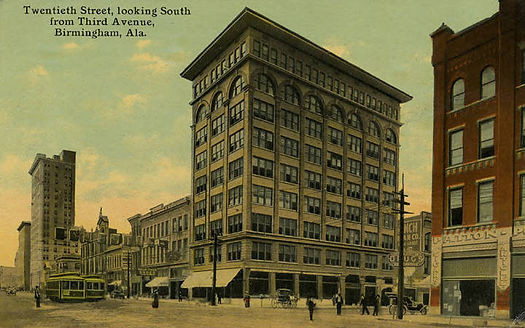


Birmingham once had a large and extensive transit system, built on streetcars, trolleys, and buses. In fact, Birmingham was the first city in the world to implement a steam engine street car, and had the largest network of its kind in the US. Such a robust and innovative system was one of the key reasons Birmingham developed its nickname, "Magic City".
However, the streetcar network was torn down in the 1950's in favor of highways and car-centric development. This contributed to the large decline in urban wealth and prosperity that we still see in our city today.
This short essay, published by the UAB Digital Library, provides more information:
End of the Line: The Rise and Fall of Street Railways in Birmingham Robby Ballard
Our Streetcar Network
Was one of the Largest in the Nation
In this map, we recreated Birmingham's historic streetcar network using archived maps. Open up the Layers tab in the top right to explore Birmingham's network.
Our maps are best viewed on desktop. Click HERE for a fullscreen view.
Cities Grow and Change Over Time
Open up the Layers tab in the top right to explore what Birmingham used to look like.
Our maps are best viewed on desktop. Click HERE for a fullscreen view.
The original source of each photo is linked in this spreadsheet HERE
Special thanks to the Birmingham Public Library, the Alabama Archives, and Bham Wiki.

Birmingham, like all cities, has grown and evolved tremendously in the past 100 years. To better understand this evolution, we found ~150 historical photos of Birmingham and pinned each to the street corner the photo was taken from. Every photo is labeled with the building's fate today. Some buildings were replaced with bigger and better things as the city grew. Others burned down or fell into disrepair.
However, in the 1950's, Birmingham adopted a new policy of city building called "auto-oriented development", developing infrastructure that specifically (and exclusively) caters to vehicles. Local main streets were bulldozed for wider roads, interstate highways were forced through the city's neighborhoods, and Birmingham's transit system was defunded. These changes left Birmingham reeling, and we are still feeling their consequences today.
Visit Matthew Kwok's project to see how extensively the neighborhoods near Malfunction Junction (I-20 and I-65) emptied out since the highway's construction.


Instead of continuing to build the people-first city of the future, these new policies have taken away critical housing from the city, created new forms of social inequality, increased our pollution production, and hollowed out our once-thriving urban core.
Historic Imagery vs Modern Day
Open up the Layers tab in the top right to explore historic imagery of Birmingham!
Our maps are best viewed on desktop. Click HERE for a fullscreen view.
REMAINING SECTIONS COMING SOON!
The way we Build Our City MATTERS
Join us at Better Birmingham to help build a beautiful, livable city that is accessible to us all.
